
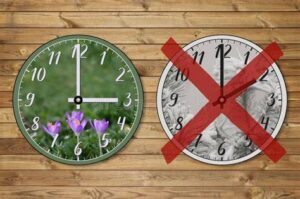
 Cuba will maintain Daylight Saving time until November 7, 2027 — next year — as part of measures to mitigate the impact of an electricity generation deficit caused by the United States blockade.
According to a joint statement released this Saturday by the Ministry of Energy and Mines (MINEM) and the Ministry of Labor and Social Security (MTSS), the decision aims to prevent an increase in power supply disruptions — estimated at 126 megawatts (MW) — during the evening peak demand period.
Of that total, 76 MW are attributed to energy savings from reduced use of artificial lighting, while 50 MW come from solar photovoltaic power generation during that time.
This measure is being implemented against a backdrop of fuel shortages for electricity generation — a situation that Cuban authorities attribute to the intensification of the U.S. economic blockade and an “energy siege” against the island.
By keeping clocks set one hour ahead, sunrise will occur later according to official time.
To mitigate the impact of this adjustment on daily social activities during the early morning hours, authorities have ordered a 30-minute delay to the start times for schools and workplaces between November 1, 2026, and March 14, 2027 — the period during which standard time would otherwise be in effect.
The statement specifies that heads of organizations, in agreement with labor unions, may adjust work schedules in accordance with Article 223.2 of Law 189 (the Labor Code, dated July 30, 2026), provided that workers’ wages remain unaffected. In facilities that operate on a continuous basis, start and end times may also be adjusted — in line with the specific nature of their activities and processes — to mitigate the drawbacks resulting from the continuation of summer working hours.
The statement asserts that these actions are part of a policy of pressure which, in the organization’s view, seeks to weaken Cuban sovereignty and the will of its people.