
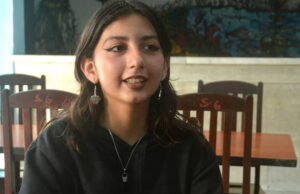
 For Samanta Tania Quintero Ortega, the dream of becoming a doctor carries the pulse of two homelands. As the daughter of a Cuban doctor and a Venezuelan woman who met on an internationalist mission, her vocation for health runs in her veins.
She grew up listening to stories of consultations and operating rooms, and watching her older sister forge her path in the medical career at the University of Medical Sciences (UCM) of Villa Clara.
Trained in the rigorous environment of the Ernesto Che Guevara Pre-University Vocational Institute of Exact Sciences, her goal was always clear: to join the family’s team of doctors.
But unlike her sister, Samanta, now a student at the University College (CU) of the UCM, she is living a pioneering experience in the province, as she has a pre-assigned career path and has been preparing, since twelfth grade, for the challenges of Cuban medicine. Her dream is just beginning.
Differentiated Training for Priority Careers
In the educational landscape of this central province, the aforementioned college emerges as a commitment to strengthening access to priority health careers.
In the 2025-2026 opening year, the project welcomes 42 students with the goal of providing them with differentiated training for careers such as Medicine, and the Bachelor’s degrees in Nursing, and Hygiene and Epidemiology—specialties that in recent years have not met their enrollment targets.
Coordinated by Dr. Sandy Orlando Moré Mir, a tenured professor with a doctorate in Pedagogical Sciences, the project began to take shape between March and April 2025.
“University colleges have the mission of contributing to the vocational guidance and training of students toward priority careers,” explained Moré Mir.
“We chose these three to attract students starting in eleventh grade and better prepare them for their future professions.”
Current enrollment is distributed among 37 students at the main campus in Santa Clara, all from that municipality, and five at the branch in Sagua la Grande, the project’s only extension for now, due to the presence of a university branch in that area. Expansion to other locations is currently under analysis.
The CU curriculum is divided into two stages. The first, from September to March, covers the twelfth-grade curriculum, but with an added value: complementary courses.
Unlike traditional pre-university programs, where these spaces are used to prepare for entrance exams, these programs are designed to introduce students to health science specialties.
Introductory courses in Medicine, Nursing, and Hygiene and Epidemiology are offered, in addition to a comprehensive vocational training course that fosters research.
Thanks to this process, students already have ORCID codes, Google Scholar profiles, and articles ready for publication in the journal Escalpelo.
The second stage, or preparatory phase, will begin on April 20 with intensive courses specific to each major.
Teaching Innovation and Adaptation to the Current Situation
The school’s faculty, although not yet officially appointed (the process is underway with the Ministry of Public Health), is composed of 14 professors from various faculties and pre-university education.
Among them is José Luis Matos, a professor of Biostatistics and Informatics at the Complutense University of Madrid (UCM), who teaches Informatics at the University Center (CU) with a novel approach.
“I link the teaching of the subject with the profile of Medical Sciences so that students arrive in their first year with more applicable knowledge,” he stated while finalizing the details of his students’ final evaluations.
This teaching work takes place in a complex context. Faced with the energy emergency and the country’s fuel shortage, the teaching and learning process has been reorganized.
The students from the University Center have reintegrated into their original pre-university schools and, in Santa Clara, are using the facilities of the Martí Provincial Library, located in Vidal Park, to ensure the continuity of their studies.
“It was a process of persuasion with the students and their parents, but they have already adapted and are standing out in their new groups,” commented coordinator Moré Mir.
“The teachers at the pre-university schools have welcomed them very well; “They help in deepening the understanding of Biology or Chemistry,” she added.
Samanta Tania, who values ??“the rigor of the teachers in their training,” nevertheless laments the logistical difficulties.
“We are very sorry that the school has temporarily ceased operations at the university campus as a consequence of the United States blockade of Cuba, which generates so many shortages, including the fuel deficit we are experiencing,” she expresses with the maturity of someone who knows that the context is part of the education. Despite this, her enthusiasm and that of her classmates remains.
Lizzaily Zamora Cañizares, another student aspiring to study Medicine, agrees that what she enjoys most about the school is precisely this exposure to the field that they wouldn’t have in a typical pre-university school.
The dream continues
For Samanta, the path is already laid out, but that doesn’t make it any less challenging. Upon finishing twelfth grade in March, and after passing the preparatory course in April, her admission to the Faculty of Medicine will be guaranteed, without the need for traditional entrance exams.
Their story, that of a family united by medicine and two flags, is just one example of the enthusiasm generated by that first year at the University College.
While Dr. Sandy Orlando Moré Mir acknowledges the fundamental support of the Preparatory College of the Marta Abreu Central University of Las Villas, whose guidance was key in these early stages, Samanta is preparing for the next step.
With the rigor of Che Guevara in her heart, and the example of her father and sister, her dreams begin to take flight in the classrooms of the University of Medical Sciences in Villa Clara, thus writing the first pages of a story that promises many more chapters in medical training in central Cuba.