
 For Samanta Tania Quintero Ortega, the dream of becoming a doctor carries the pulse of two homelands. As the daughter of a Cuban doctor and a Venezuelan woman who met on an internationalist mission, her vocation for health runs in her veins.
She grew up listening to stories of consultations and operating rooms, and watching her older sister forge her path in the medical career at the University of Medical Sciences (UCM) of Villa Clara.
Trained in the rigorous environment of the Ernesto Che Guevara Pre-University Vocational Institute of Exact Sciences, her goal was always clear: to join the family’s team of doctors.
But unlike her sister, Samanta, now a student at the University College (CU) of the UCM, she is living a pioneering experience in the province, as she has a pre-assigned career path and has been preparing, since twelfth grade, for the challenges of Cuban medicine. Her dream is just beginning.
Differentiated Training for Priority Careers
In the educational landscape of this central province, the aforementioned college emerges as a commitment to strengthening access to priority health careers.
In the 2025-2026 opening year, the project welcomes 42 students with the goal of providing them with differentiated training for careers such as Medicine, and the Bachelor’s degrees in Nursing, and Hygiene and Epidemiology—specialties that in recent years have not met their enrollment targets.
Coordinated by Dr. Sandy Orlando Moré Mir, a tenured professor with a doctorate in Pedagogical Sciences, the project began to take shape between March and April 2025.
“University colleges have the mission of contributing to the vocational guidance and training of students toward priority careers,” explained Moré Mir.
“We chose these three to attract students starting in eleventh grade and better prepare them for their future professions.”
Current enrollment is distributed among 37 students at the main campus in Santa Clara, all from that municipality, and five at the branch in Sagua la Grande, the project’s only extension for now, due to the presence of a university branch in that area. Expansion to other locations is currently under analysis.
The CU curriculum is divided into two stages. The first, from September to March, covers the twelfth-grade curriculum, but with an added value: complementary courses.
Unlike traditional pre-university programs, where these spaces are used to prepare for entrance exams, these programs are designed to introduce students to health science specialties.
Introductory courses in Medicine, Nursing, and Hygiene and Epidemiology are offered, in addition to a comprehensive vocational training course that fosters research.
Thanks to this process, students already have ORCID codes, Google Scholar profiles, and articles ready for publication in the journal Escalpelo.
New solar kits to benefit Cuban communities
written by Ed Newman March 29, 2026
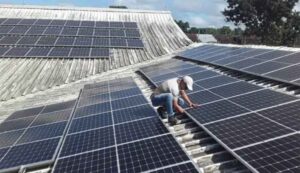
Communities in eastern Cuba will benefit from the installation of new solar kits through international cooperation projects that guarantee access to electricity in rural areas.
Following the arrival of the equipment in Holguín province last week, specialists are coordinating the technical acceptance of the systems. This initiative will allow various settlements in Holguín to replace the use of fuel generators with renewable sources, guaranteeing a stable and clean supply.
Fernando Echavarría, representative of projects with Canada, explained that this donation aims to ensure electrical autonomy in mountainous areas where fuel logistics are complex. The program prioritizes rural communities in Holguín, where the use of solar radiation will transform the quality of life of its inhabitants.
A key location is the settlement of La Melba, situated in Alejandro de Humboldt National Park, a protected area declared a World Heritage Site. Located in the mountainous region of Holguín and Guantánamo provinces, it is considered the most important biodiversity hotspot in the insular Caribbean due to its high endemism and variety of ecosystems.
In this area, more than 80 homes and 15 institutions that currently only have four hours of electricity will receive systems to ensure 24-hour service. Studies conducted with the University of Moa determined the feasibility of using high-power equipment with up to 36 hours of autonomy without direct sunlight.
Javier Hernández, a specialist from the Spanish firm Novelec, emphasized that the systems were designed for the high humidity of the environment. The technology includes high-efficiency bifacial panels and industrial-grade protections, capable of operating under the constant rainfall that characterizes the geography of eastern Cuba.
With the integration of this donation, the Strengthening of Leadership and Participation of Women in the Renewable Energy Sector (Former) program reinforces the national energy change, prioritizing the well-being of the communities of Holguín and the preservation of the natural environment in protected areas.